
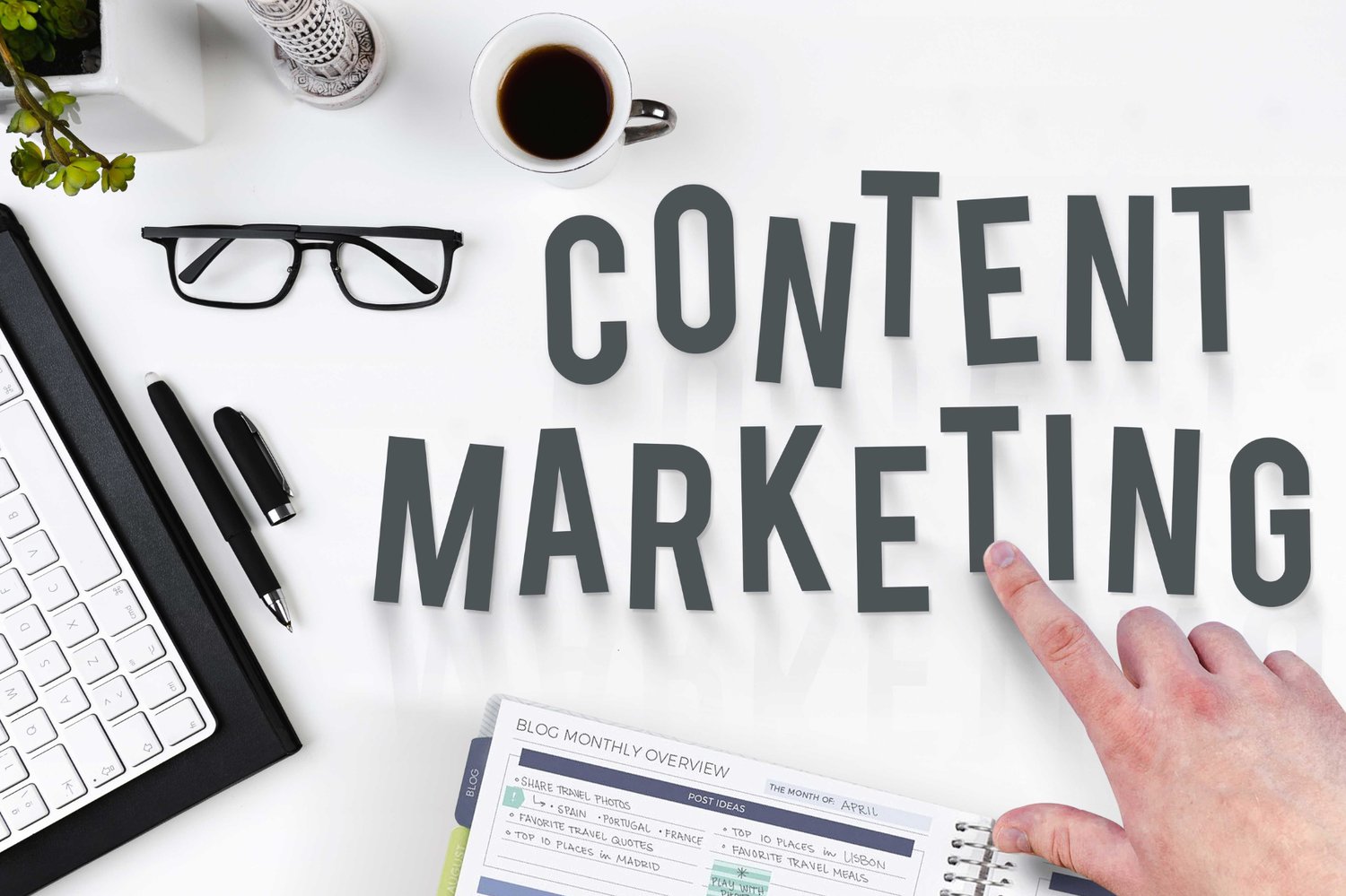

Content marketing in 2026 is no longer about "posting consistently” and hoping the algorithm is kind. It is about earning trust, owning your audience, and publishing genuinely useful assets that AI tools and humans can't ignore. The good news is you do not need a massive budget to do this, you need the right formats, sharp positioning, and copy that turns attention into action.
If you want this built and executed for you, start here: Content Marketing & Copywriting Services
Why Content Marketing Matters More In 2026
Most teams feel they are doing "okay”, but very few are genuinely winning. In Content Marketing Institute's (CMI) latest B2B research, only 12% of marketers rate themselves as highly effective, while nearly half are either neutral or ineffective.
What'separates the effective teams from the rest is not "more content”. CMI's 2026 trends report shows the biggest needle-movers were content relevance and quality (65%) and team skills and capabilities (53%), ahead of tools or budget.
On top of that, audiences are increasingly choosing brands they trust. Edelman's 2025 trust research reports that 80% of people trust the brands they use, and they are looking for stability and confidence, not noise.
So the play in 2026 is clear: publish fewer, stronger assets, distribute them properly, and upgrade the copy so the value is instantly obvious.
The 2026 Content Marketing Framework (So Your Examples Actually Work)
Before the examples, use this quick filter. The best content in 2026 tends to be:
- Evidence-led: original data, experiments, case studies, real screenshots, real numbers.
- Utility-first: templates, tools, checklists, calculators, playbooks.
- Trust-building: clear author expertise, citations, transparency, real opinions. Google explicitly encourages "helpful, reliable, people-first content” and explains E-E-A-T as a useful lens.
- Built for distribution: designed to become multiple pieces across LinkedIn, email, short-form video, webinars, and sales enablement.
- Copy-led: the hook, structure, CTAs, and narrative are doing real work, not filler.
25 Content Marketing Examples You Can Copy In 2026
Each of these is a "content product”, not just a post. Pick 5-7 that match your business model and audience, then commit for 90 days.
1) A "Start Here” Pillar Page (Your Evergreen Homepage For A Topic)
Create one definitive guide that acts as the centre of your content universe, then build supporting articles around it.
2) Original Research Report (The Fastest Credibility Builder)
CMI's annual benchmarks are a perfect model: research becomes articles, charts, webinars, and media mentions.
3) Industry Benchmark Calculator
A simple tool that lets users compare themselves against best practices (even if it is a score out of 100).
4) A Template Library (Turn Knowledge Into Downloads)
Notion's template ecosystem shows how templates become distribution, SEO, and user acquisition.
5) A Playbook Hub (Step-By-Step Processes People Save)
Atlassian's Team Playbook is a strong example of turning expertise into "plays” that people repeatedly use.
6) Case Studies Written Like Stories (Not Brochures)
Structure them as: problem tension → constraints → decision → implementation → measurable results → lessons.
7) A "Strategy Teardown” Series (Build Authority Through Analysis)
Audit real examples in your industry: messaging, funnels, landing pages, ads, email flows.
8) A Monthly Newsletter That Has A Clear Promise
One audience, one promise, one cadence. Make it genuinely worth opening.
9) A Recurring "Field Notes” Series From The Founder Or Operator
Short, specific lessons from real work: what worked, what failed, what you changed.
10) A Webinar Series That Becomes 12 Content Pieces
Webinars are not a one-time event. They are a content engine.
11) A Customer Community (Even Small)
CMI's research shows some teams expect increased investment in building online communities, which signals where attention is going.
12) A "Tools And Stack” Page (High-Intent SEO, High Conversion)
List your recommended stack by budget tier, and explain why.
13) A "Pricing And Packaging” Explainer (Pre-Sell With Education)
The goal is not to defend price, it is to teach buyers how to evaluate options.
14) A "Common Mistakes” Page (The Content Buyers Search For)
Publish the uncomfortable truth, backed by examples and fixes.
15) A Short-Form Video Series That Supports Long-Form Content
CMI reports many marketers expect increased investment in video, which aligns with how people learn and share in 2026.
16) A Creator Partnership Series (Distribution With Trust Baked In)
Creator advertising is becoming a major budget line. IAB projects U.S. creator ad spend to reach $37 billion in 2025, growing far faster than the broader media industry.
Turn that into content, not just ads: co-host sessions, co-create guides, co-publish insights.
17) A "Sales Enablement Vault” (Content That Closes Deals)
One-page's, objection-handling sheets, comparison guides, email sequences.
18) A "Best Of” Hub (Curate Your Own Category)
Curate the best tools, examples, and frameworks for a niche, with commentary.
19) A "Before And After” Portfolio (Show Outcomes, Not Services)
Show messaging before and after. Landing page before and after. SEO results before and after.
20) A "First Principles” Explainer Series (Teach The Why, Not Just The How)
This is where thought leadership comes from.
21) A "Role-Based” Content Path (CFO Vs Marketing Manager Vs Founder)
Same product, different objections and priorities.
22) A "Prompted By Clients” FAQ Library
Every sales call becomes an article. Every objection becomes a post.
23) A Quarterly POV Report (Your Brand's Opinion, With Evidence)
This is how you become quotable.
24) A "Challenge” Campaign (7-14 Days, Measurable Outcome)
Provide daily steps, worksheets, and a clear finish line.
25) A Service Page That Reads Like A Conversion Asset (Not A Brochure)
In 2026, your service page'should be a mini playbook: who it is for, what you do, what results look like, proof, process, FAQs, and a strong CTA.
A good benchmark for how this should be written is exactly what we do here: Content Marketing & Copywriting Services
What To Priorit'se Right Now (The 80/20 Shortlist)
If you want the biggest impact with the least complexity, start with:
- One pillar page + 6 supporting articles (SEO foundation)
- One original research or "insights” asset per quarter (authority)
- One newsletter (owned audience)
- One case study per month (proof)
- One short-form content loop that repurposes everything (distribution)
HubSpot's 2025 marketing research highlights how widely AI is being used for workflows like repurposing and analytics, which matters because the winners are building systems, not just writing posts.
How To Measure Content Marketing Success In 2026 (Beyond Vanity Metrics)
Track metrics that map to business outcomes:
- Demand: qualified enquiries, booked calls, demo requests
- Sales influence: assisted conversions, deal velocity, win rate contribution
- Trust: branded search growth, repeat visitors, newsletter replies
- Distribution: shares by relevant people, backlinks, mentions
- Efficiency: content-to-lead cost, time-to-publish, repurposing output
Then set a simple "content scorecard” per asset: reach, engagement, conversion, assisted impact.
Common Reasons Content Marketing Fails (And How To Fix Them)
- Content is generic and interchangeable
- Fix: publish evidence, show your work, add screenshots, add data, take a position.
- No distribution plan
- Fix: pre-plan repurposing and channels before you publish.
- Weak copy and unclear CTAs
- Fix: upgrade the hook, structure, and offer. Do not make readers guess what to do next.
- No consistency window
- Fix: commit to 90 days. Most teams quit before compounding starts.
FAQs
What is content marketing in 2026?
It is the practice of creating and distributing content that builds trust and demand, using assets that are genuinely useful, evidence-led, and designed for multi-channel distribution.
What content formats work best right now?
Utility content (templates, tools, playbooks), proof content (case studies, benchmarks), and trust content (expert POV with credible sources) are consistently strong because they are harder to fake and easier to act on.
Should I use AI for content?
Yes, but as an amplifier, not a replacement. The most effective teams are improving fundamentals like relevance and quality, then using AI to scale distribution and workflows.



















Comments (0)